Keywords: Scoliosis, scoliosis brace, back brace for scoliosis, ScoliBrace
Scoliosis bracing is a non-surgical treatment option that can help slow down the progression of the spinal curve, provide support to the spine, and alleviate pain. One such brace is the ScoliBrace, which is designed for individuals with mild to moderate scoliosis. In this article, we will discuss the features, benefits, and considerations when using a ScoliBrace for scoliosis treatment.
What Is Scoliosis?
Scoliosis is a condition where the spine curves abnormally to the side, often resembling an “S” or “C” shape. While some curvature is subtle, more pronounced curves can lead to uneven shoulders, hips, or even noticeable differences in waist height. Scoliosis can affect both children and adults, although it’s most commonly spotted during periods of rapid growth, such as adolescence.
How to Check for Scoliosis at Home
If you're wondering whether you or a loved one might have scoliosis, there are some simple steps you can take at home before consulting a healthcare professional. One quick self-check involves standing in front of a mirror and looking for signs such as uneven shoulders, misaligned hips, or an obvious curve in the spine.
- Visual inspection: Stand behind the person and look for uneven shoulders, one shoulder blade sticking out more than the other, or an uneven waistline.
- Adam’s Forward Bend Test: See below.
- Clothing fit: Notice if shirts or pants appear crooked or hem lengths don’t match up, as this can sometimes be a clue.
While these at-home checks are helpful, only a healthcare professional can confirm scoliosis through a physical examination and, if needed, X-rays. If you spot any signs, it’s wise to consult with a doctor, orthopedic specialist, or physiotherapist experienced in spinal conditions. Early detection leads to better management and results.
Adam’s Forward Bend Test:
- Stand with your feet together and bend forward slowly at the waist, letting your arms hang down.
- Ask a family member or friend to observe your back. They should look for any asymmetry—such as one side of the rib cage appearing higher than the other or any visible curve in the spine.
For further peace of mind, several free mobile apps—like the Scoliometer app or ScoliScreen from Scolicare offer basic posture assessments using a smartphone. While these tools can provide helpful preliminary information, they cannot replace a professional evaluation from a doctor or scoliosis specialist.
Commonly Discussed Topics About Scoliosis
When it comes to understanding scoliosis, there’s a wide range of topics that people often explore, whether they’re newly diagnosed or long-time members of the scoliosis community. Some of the most frequently discussed subjects include:
- Types and Causes of Scoliosis: Many are interested in the differences between adolescent, adult, and de-novo scoliosis, as well as the underlying causes and factors influencing curve progression.
- Living with Scoliosis: From navigating daily back pain to maintaining good posture, people often share tips, challenges, and personal experiences of living with this condition.
- Non-Surgical Treatments: Bracing options (like ScoliBrace and others), specialized physical therapies such as the Schroth Method or SEAS, and tailored exercises are popular areas of interest.
- Mental Health and Support: Coping with a chronic condition can impact well-being, so mental health, peer support, and advice on building a positive mindset are regularly discussed.
- Screening and Diagnosis: Early detection through screenings (including school programs and x-rays) and consultations—whether in-person or via telehealth—are important considerations, especially for parents.
- Staying Active: Many want to know how to safely participate in sports and fitness activities, and what exercises can be helpful or should be avoided.
- Raising Awareness: Community members engage in awareness campaigns, celebrate Scoliosis Awareness Month, and share stories to help others recognize and understand the condition.
- News and Developments: Updates from organizations like the Scoliosis Research Society (SRS) or coverage of world events such as World Spine Day and how they relate to scoliosis are also regularly highlighted.
By staying informed on these key topics, individuals and families can better manage scoliosis and make empowered decisions for their health and quality of life.
Types of Scoliosis
Scoliosis isn’t a one-size-fits-all condition; it comes in several forms based on age and underlying causes. Understanding these types is essential for choosing the best treatment, whether it's observation, bracing, or another intervention.
Common types of scoliosis include:
- Idiopathic Scoliosis: This is by far the most common type, usually showing up during periods of rapid growth. Idiopathic scoliosis is further categorized by age:
- Infantile (0-3 years)
- Juvenile (4-10 years)
- Adolescent (11-18 years)—Adolescent idiopathic scoliosis (AIS) is the most frequently diagnosed, often appearing just before or during puberty.
- Adult Scoliosis: While some adults develop scoliosis due to untreated childhood curves, many experience “de novo” scoliosis that begins later in life, often related to spinal degeneration or arthritis.
- Congenital Scoliosis: Present at birth, this less common type results from vertebral anomalies that develop in utero.
- Neuromuscular Scoliosis: Associated with medical conditions like cerebral palsy, muscular dystrophy, or spinal cord injuries, this type develops secondary to muscle or nerve disorders.
No matter which type, early identification and targeted treatment can make a substantial difference in managing symptoms and supporting spinal health.
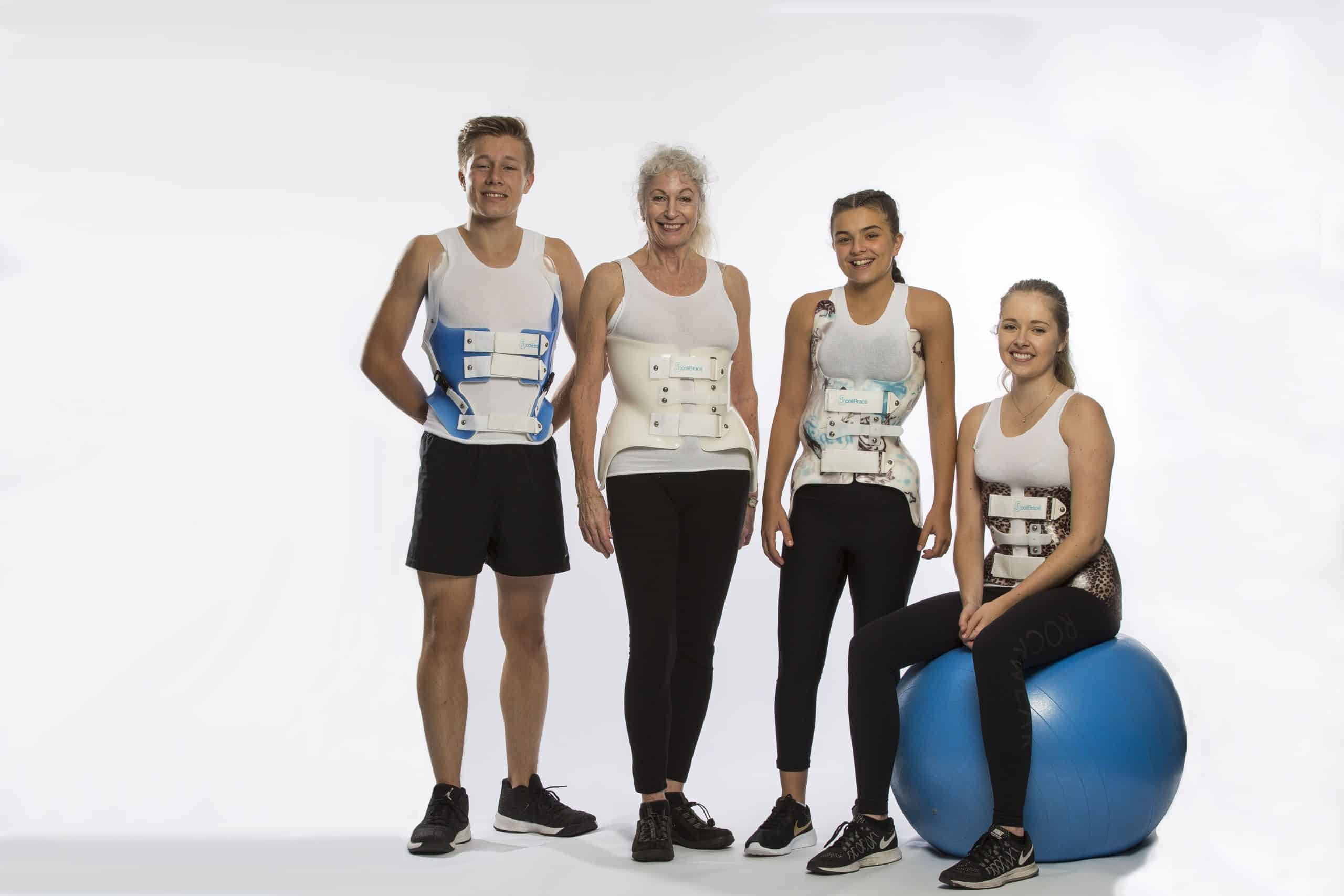
Features of the ScoliBrace: The ScoliBrace is a custom-made, rigid brace designed to address the unique needs of each patient. The brace's key features include:
- Three-dimensional correction: The ScoliBrace targets the three-dimensional nature of scoliosis, providing support and corrective forces in all planes (frontal, sagittal, and transverse) to help restore spinal alignment. Incorporating the latest generation of super-corrective bracing technology, the ScoliBrace works by gently guiding the body and spine into a posture that is the opposite of the scoliosis curve. This unique approach not only supports the spine but also aims to actively reduce the curvature in most cases, while simultaneously working to improve the overall appearance of the body.
- Custom fit: Using advanced 3D scanning technology, the ScoliBrace is designed to fit the patient's body precisely, providing optimal support and comfort. Each brace is individually crafted based on the unique curvature and posture of the patient, utilizing 3D full-body laser scans, x-rays, and posture photographs. This highly personalized approach ensures that the brace addresses the specific three-dimensional aspects of each person's scoliosis. The design process incorporates Computer Aided Design (CAD) and Computer Aided Manufacture (CAM) techniques, resulting in a custom-made brace that closely matches the patient's anatomy for maximum effectiveness.
- Easy to wear: The ScoliBrace is lightweight and low-profile, allowing for greater ease of movement and less interference with daily activities.
Benefits of the ScoliBrace: Using a ScoliBrace can provide several benefits for individuals with scoliosis, including:
- Slowing curve progression: By providing corrective forces, the ScoliBrace can help slow down the progression of the spinal curve, potentially reducing the need for more invasive treatments in the future.
- Pain relief: The ScoliBrace can help alleviate pain caused by muscle tension and misaligned vertebrae by supporting the spine and promoting better posture.
- Improved posture: By addressing spinal imbalances, the ScoliBrace can help improve overall posture, leading to increased self-confidence and a better quality of life.
Additional Advantages of ScoliBrace:
Beyond its clinical benefits, the ScoliBrace is designed with everyday comfort and usability in mind. Unlike many traditional braces, it features a front-opening design, making it much easier to put on and take off without assistance—a welcome feature for both children and adults seeking greater independence in their daily routines.
The ScoliBrace is also lightweight and low-profile, so it fits discreetly under clothing and allows for a wider range of movement. To help patients feel more comfortable and confident, the brace can be personalized with a variety of colors and patterns, turning a medical device into something uniquely their own.
This thoughtful blend of function, comfort, and personalization helps encourage consistent use and supports a more positive bracing experience overall.
Considerations When Using a ScoliBrace: When using a ScoliBrace for scoliosis treatment, it is essential to consider the following:
- Compliance: For the ScoliBrace to be effective, patients must wear the brace as prescribed by their scoliosis specialist, which can range from 12 to 23 hours per day, depending on the severity of the curve.
- Follow-up appointments: Regular check-ups with a scoliosis specialist are crucial to monitor the progression of the curve and make any necessary adjustments to the brace.
- Exercises and physical therapy: In addition to bracing, scoliosis-specific exercises and physical therapy may be recommended to help strengthen and stretch the muscles surrounding the spine, promoting better posture and reducing the progression of the spinal curve.
Taking the Next Step
If you have concerns or questions about scoliosis or the use of the ScoliBrace, it’s important to seek professional guidance. A consultation with a scoliosis specialist can provide personalized recommendations based on your unique condition and goals. Early intervention and the right support can make a significant difference in the management and outcome of scoliosis.
Conclusion
The ScoliBrace is a valuable non-surgical treatment option for individuals with mild to moderate scoliosis, offering benefits such as slowed curve progression, pain relief, and improved posture. However, it is essential to work with a scoliosis specialist, such as Dr. Matthew Potts at Dorsi.uk or to determine the most suitable treatment approach for your unique needs and goals. By combining the ScoliBrace with targeted exercises and physical therapy, patients can effectively manage their scoliosis and improve their quality of life.
BONUS CONTENT
Relevant News and Current Topics in Scoliosis Care
Staying informed about the latest developments can help individuals and families make the best choices for managing scoliosis. Here are some current topics and updates that may be of interest:
- Integrating Yoga into Scoliosis Management: Recent discussions in the scoliosis community have highlighted how gentle yoga practices, such as those from the Iyengar method, may complement bracing by improving flexibility, balance, and core strength.
- Chiropractic Considerations for Scoliosis: Ongoing research and patient stories shed light on the potential role of chiropractic care. While it isn’t a primary treatment, some find benefit from specific adjustments and soft tissue therapies as part of a broader management plan.
- Scoliosis Awareness Initiatives: June is recognized internationally as Scoliosis Awareness Month. Across the UK and abroad, organizations like Scoliosis Association UK and Curvy Girls Scoliosis hold events and educational campaigns to raise awareness and foster community support.
- Understanding Scoliosis-Specific Exercises: There is growing interest in rehabilitation techniques such as the Schroth Method and SEAS (Scientific Exercise Approach to Scoliosis). These tailored exercise programs aim to correct posture and improve spinal stability, often in conjunction with bracing.
- School-Based Educational Events: Many communities now offer in-school programs during Scoliosis Awareness Month, designed to educate students and staff about early detection and support for young people living with scoliosis.
Staying up to date with these topics can offer new avenues for support, information, and holistic scoliosis management.
Keywords: Scoliosis, scoliosis brace, back brace for scoliosis, ScoliBrace