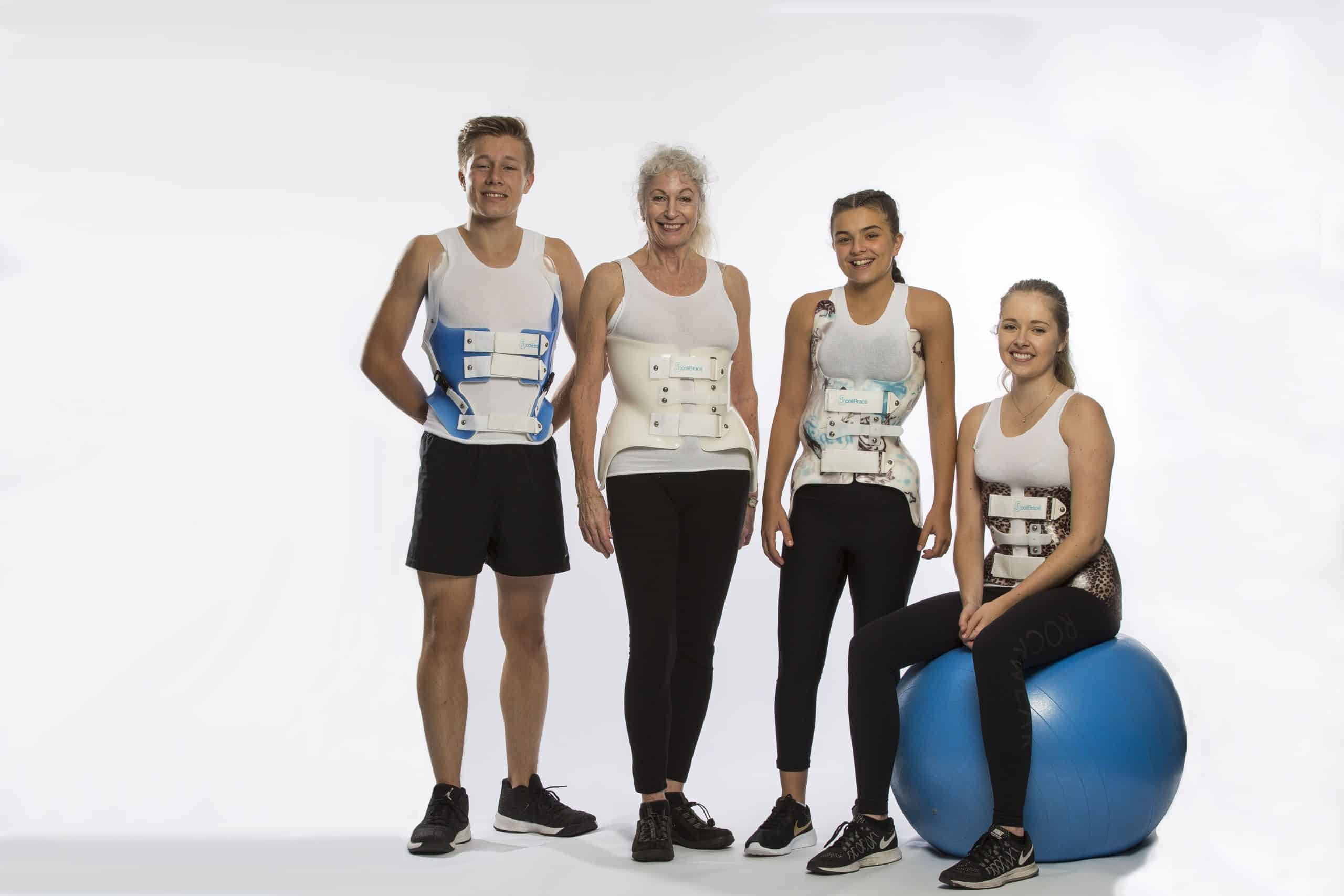
Scoliosis Specific Exercises
Not all exercise is equal when it comes to managing scoliosis. General fitness is helpful, but scoliosis-specific exercises are designed to counteract curve mechanics, improve posture, and reinforce brace correction.
What Makes an Exercise “Scoliosis-Specific”?
These exercises:
- Target muscles that support and de-rotate the spine.
- Focus on asymmetrical strengthening and stretching.
- Teach three-dimensional postural correction and awareness.
Examples of Evidence-Based Method Scoliosis Specific Exercises
At Dorsi Spinal Institute, we use approaches such as:
- Schroth method: combining breathing, postural, and rotational exercises.
- SEAS (Scientific Exercise Approach to Scoliosis): emphasising active self-correction and functional tasks.
Combining them into an approach called ScoliBalance
Benefits of Scoliosis Specific Exercise
Research suggests that, particularly when combined with bracing, these exercises can:
- Reduce pain and fatigue.
- Improve posture and cosmetic appearance.
- Contribute to stabilising or improving curves.
Personalised Programmes
Exercises are tailored to:
- Curve type and location.
- Age and growth stage.
- Brace wear schedule.
Dorsi physios teach patients in-clinic and then provide home plans and digital support.
Next Steps
If you want targeted exercise that truly supports your curve, rather than just general fitness, Dorsi Spinal Institute can design a scoliosis-specific programme that fits your needs and schedule.
Related reading: see our blogs on Schroth and SEAS, bracing plus exercise, and spine-friendly sports.
LINK.
Medical News Today
Scoliosis Exercise Study
Written by
Dr Matthew ABJ Potts BSc MSc DC ISPRM
Clinical Director
Doctor of Chiropractic
Specialist Scoliosis Consultant
Fellow of the British Scoliosis Society
Member of the Scoliosis Association (UK)
Chair of the Clinical Advisory Board at Meloq AB
Member of the International Society of Physical and Rehabilitation Medicine
Editorial board member of international journals CICRJ & Rehabilitation Science