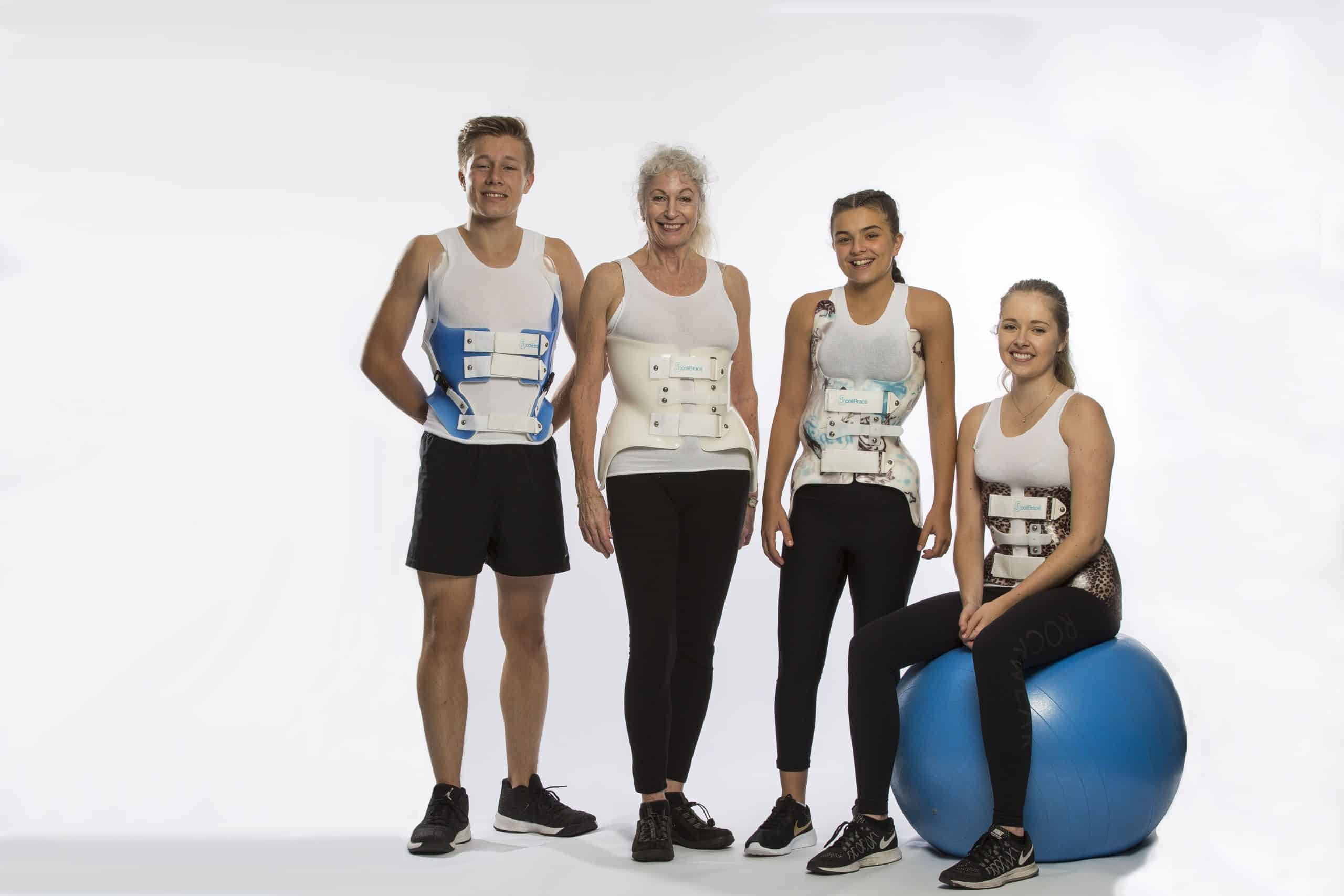
Traditional braces were often bulky, uncomfortable, and designed simply to “hold” a curve, not to correct it. ScoliBrace represents a new generation of 3D-customised bracing technology, and Dorsi Spinal Institute is at the forefront of its use in the UK.
Instead of plaster casts or simple measurements, ScoliBrace starts with a 3D scan of the patient’s torso. This scan is used to create a digital model of their body and curve, allowing precise pad placement and targeted corrective forces.
Scoliosis is not just a sideways bend; it includes twisting (rotation) and changes in the natural curves of the spine. ScoliBrace addresses all three dimensions. The brace is shaped to gently guide the spine towards a more neutral alignment, rather than simply squeezing from the sides.
ScoliBrace is lighter, lower profile, and easier to conceal than many older designs. Its comfort-focused design helps patients wear it for the recommended hours, which is critical for success. Soft edges, custom padding and thoughtful strap placement all reduce friction and pressure points.
At Dorsi Spinal Institute, ScoliBrace is never used in isolation. Our scoliosis-specific exercise programmes help patients actively engage their muscles while the brace creates structural correction. This synergy improves posture, core strength, and long-term outcomes.
We review brace fit and effect regularly using follow-up scans and x-rays where appropriate. Adjustments are made over time to keep the brace optimally corrective as the patient grows or the curve responds.
ScoliBrace is most effective in growing children and adolescents with moderate curves, but can also help some adults with pain and postural imbalance. Suitability is always assessed individually by Dorsi’s clinical team.
If you’ve been told your child may need a brace or if you want a second opinion on brace options. Dorsi Spinal Institute can advise whether ScoliBrace is right for you and how to integrate it into a holistic treatment plan.
Related reading: see our blogs on curve correction outcomes, bracing plus exercise, and comparing brace technologies.
Written by