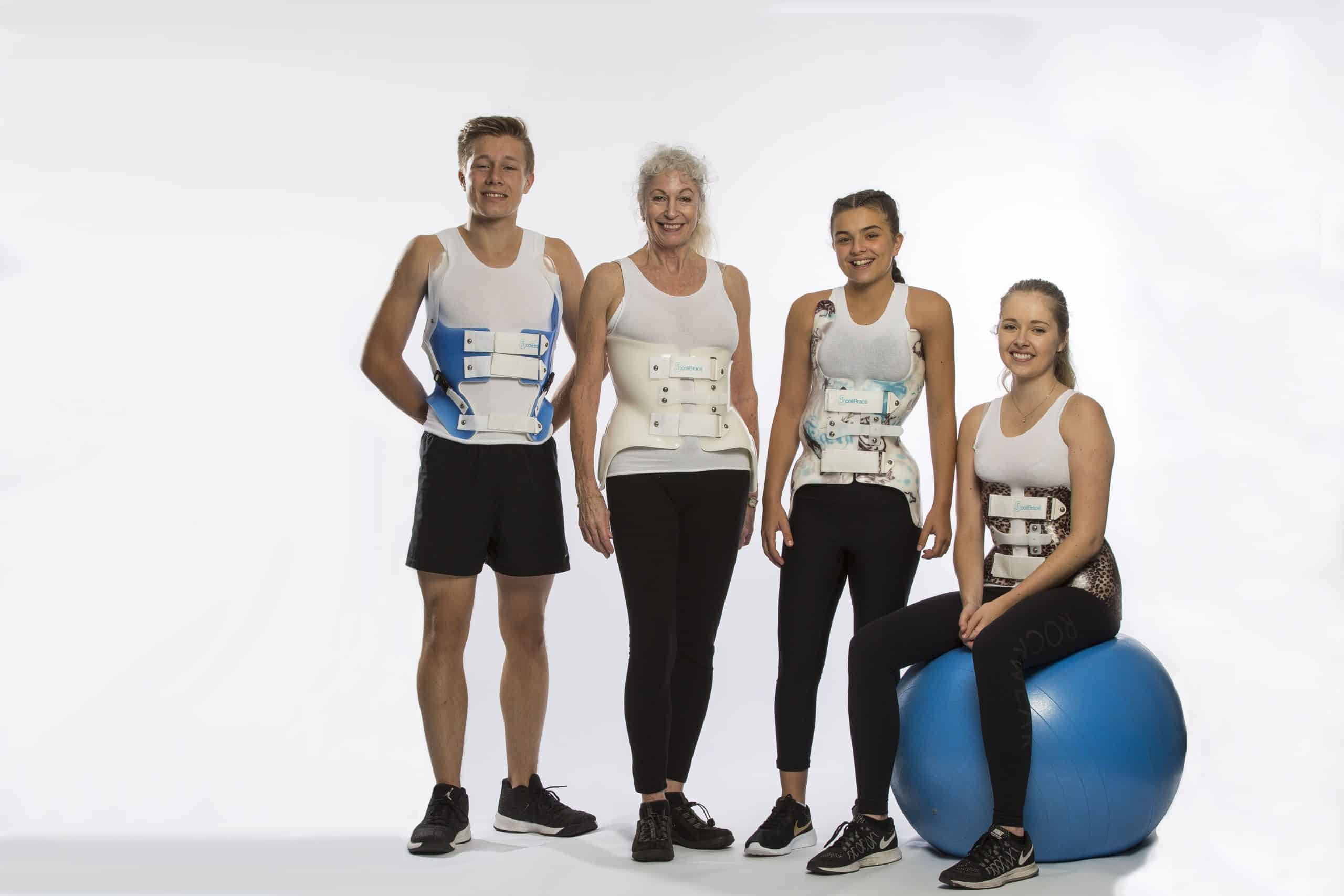
Many parents discover scoliosis for the first time when a GP, school nurse, or physio notices a curve in their child’s spine. The next question almost always comes quickly: “Does this run in families, and what does it mean for my other children?” At Dorsi Spinal Institute, these are not abstract questions, they guide how we screen, monitor, and protect families across the UK.
Research suggests that up to one in three children diagnosed with adolescent idiopathic scoliosis (AIS) have a close relative with a spinal curve. That means a parent, sibling, or grandparent may have had scoliosis even if it was never formally diagnosed. The term “idiopathic” simply means that there is no single obvious cause like trauma or a specific disease, but we do know that genetics play a powerful role in who develops a curve and how fast it may progress.
Family history does not make scoliosis inevitable. Many siblings of affected children never develop a curve at all. However, it does raise the statistical risk compared to the general population, and this is why early monitoring is so valuable.
There is currently no single “scoliosis gene” that can be tested to give a yes/no answer. Instead, a combination of many small genetic factors, growth patterns, and environmental influences interact to determine whether a curve appears. This means parents should focus less on “blame” and more on proactive monitoring.
At Dorsi Spinal Institute, genetic risk is used as a guide rather than a sentence. If one child has scoliosis, we recommend simple screening either at home using our four-step visual check, or in-clinic for any brothers or sisters during their growth years. This lets us catch small curves early and keep them small.
When you visit Dorsi Spinal Institute, part of the first assessment always includes your family story. We ask about:
This information, combined with our advanced digital imaging (including full-spine x-rays where appropriate, and 3D surface/LiDAR scanning), gives us a realistic risk picture. Children from families with known scoliosis are never left to “wait and see” without a plan.
Family screening at Dorsi Spinal Institute is simple, quick, and child-friendly. It usually involves:
If everything is normal, we advise a re-check once a year between ages 9 and 16, or sooner if parents notice shoulder or waist changes at home. If a small curve is present, we create a personalised monitoring and, if needed, early treatment plan.
If one child has scoliosis, parents naturally worry about future children or even grandchildren. The most important message is this: knowledge is power. Families that understand their risk are far more likely to spot early signs in younger siblings, request checks promptly, and avoid larger, more complex curves later.
Dorsi Spinal Institute provides written screening guides, digital resources, and ongoing advice tailored to your family. Our goal is not to alarm you, but to equip you with tools and reassurance so you never feel caught off guard again.
We recommend a professional spine check for siblings if:
Screening is painless, fast, and often hugely reassuring. If no curve is present, your child can get on with life, with only occasional re-checks. If a small curve appears, we are in the ideal position to manage it proactively.
Genetics load the gun, but growth pulls the trigger. That’s why family history matters most during growth spurts and why early detection is critical. A 10–15 degree curve in a rapidly growing child can either become a success story with brace-and-exercise treatment or a missed opportunity that leads to surgery years later.
At Dorsi Spinal Institute, experience shows that families aware of their genetic risk make faster, more informed decisions and see better outcomes. Curves found early are usually managed with non-surgical solutions like custom 3D bracing and scoliosis-specific physiotherapy, allowing children to stay active and confident.
If scoliosis runs in your family or you suspect it might, Dorsi Spinal Institute offers:
We act as your long-term partner, not just for the child currently in treatment, but for the health and confidence of the whole family.
If you, your child, or other relatives have scoliosis—or if you are simply worried—consider booking a family screening at Dorsi Spinal Institute. Together we can understand your genetic risk, protect future generations, and ensure that no curve in your family goes unnoticed or unmanaged.
Related reading: see our blogs on early screening, adolescent scoliosis, and latest scoliosis research to deepen our understanding and know exactly what to look for as your children grow.
Written by